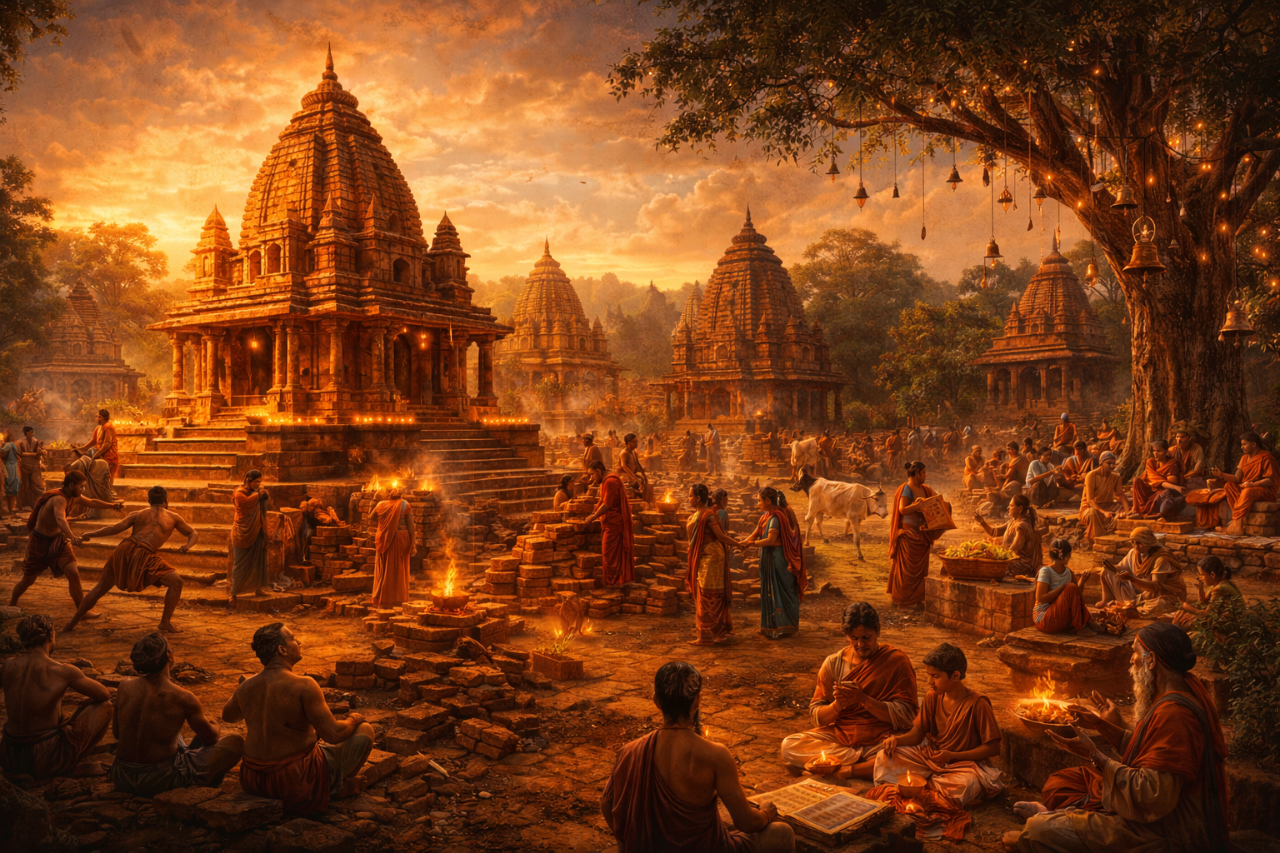
Ancient Hindu temples ran Gurukuls, Goshālas, hospitals, kitchens, martial training, music, dance, water systems, local economies & cultural archives.
They were the backbone of Bharat. 🧵
A Hindu temple was not just a “prayer hall.”
It was a living civilizational institution.
Large temples, Mathas, Peethas & pilgrimage centers often functioned as the community operating system of the region.
Here is what temples did beyond worship:
🛕 1. Devalaya
Pūjā, yajña, abhiṣeka, utsava, vrata, prasāda & festivals.
📚 2. Gurukul
Veda, Vedāṅga, Sanskrit, grammar, logic, philosophy & śāstra learning.
🏫 3. Student support
Food, lodging, stipends & free education for students and teachers.
🎙️ 4. Śāstrārtha
Debates, Vedic recitation, Purāṇa-kathā & public discourses.
🎶 5. Music
Vocal music, nādasvaram, drums, bells, conch, bhajan & kīrtan.
💃 6. Dance & Natya
Temple dance, ritual performance, drama, storytelling & festival arts.
🎨 7. Art schools
Painting, sculpture, iconography, mural art, śilpa & temple architecture.
⚔️ 8. Martial training
Dhanurveda, wrestling, weapon training & regional martial traditions.
🐄 9. Goshāla
Cow protection, dairy, ghee, agriculture support & ritual needs.
🍛 10. Anna-dāna
Feeding pilgrims, students, devotees, poor people & travelers.
🏥 11. Hospitals
Ārogyaśālā, Ayurveda, doctors, nurses, medicine storage & maternity care.
🛏️ 12. Pilgrim housing
Dharmashālā, resting halls, water, shelter & food for travelers.
📜 13. Libraries
Palm-leaf manuscripts, Vedas, Purāṇas, śāstras & sacred records.
🪙 14. Treasury
Gold, silver, jewels, coins, land grants, donations & endowments.
🌾 15. Agriculture
Temple lands, cattle, irrigation, granaries, crops & storage systems.
💧 16. Water management
Temple tanks, wells, stepwells, canals & rainwater harvesting.
⚖️ 17. Community space
Village sabhās, public announcements, dispute resolution & local decisions.
🧑🏭 18. Employment
Priests, cooks, guards, sculptors, musicians, dancers, accountants & gardeners.
🛒 19. Trade & markets
Pilgrim markets, merchant networks, artisan guilds & festival commerce.
📅 20. Calendar keeping
Tithi, nakṣatra, eclipse timing, festival calendars & ritual astronomy.
🧘 21. Dharma guidance
Guru advice, saṁskāras, family rituals, spiritual counseling & community ethics.
🔥 In short: They were not merely “places of worship.” They were spiritual, educational, cultural, economic, ecological & social institutions that sustained Hindu civilization for centuries.
Leave a Reply